
Kafka’s Two Worlds
The Myth of SisyphusThis flow follows Kafka’s movement from naturalized absurdity in The Trial to hopeful evasion in The Castle.
increasing Bearing strength in each event
 decreasing
Bearing strength in each eventdecreasingThe Arrest
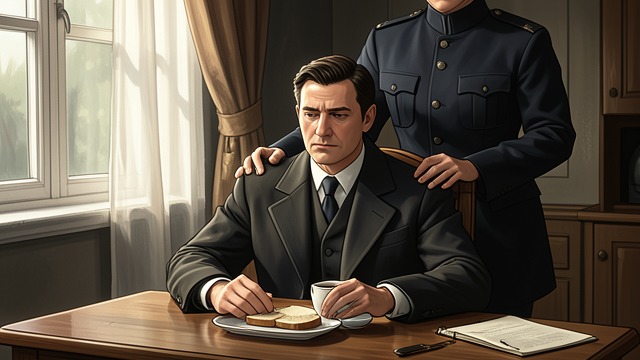
The Arrest
Unexplained Accusation
Joseph K. is arrested without learning his crime. The ordinary routines of eating, reading, and working continue beside an inexplicable legal threat.
Naturalized Horror
The lack of astonishment intensifies the absurdity. A supernatural condemnation becomes ordinary through the protagonist’s practical acceptance.
The Dark Court
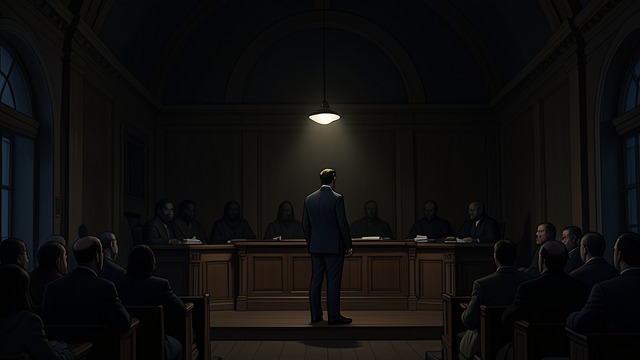
The Dark Court
Institutional Obscurity
The courtroom is dark, the lawyers are ineffective, and the proceedings refuse clear explanation. Authority appears everywhere while remaining inaccessible.
Persistent Life
Joseph K. continues ordinary activities because the absurd system has not visibly cancelled daily existence. The trial becomes a background condition of being.
The Final Execution
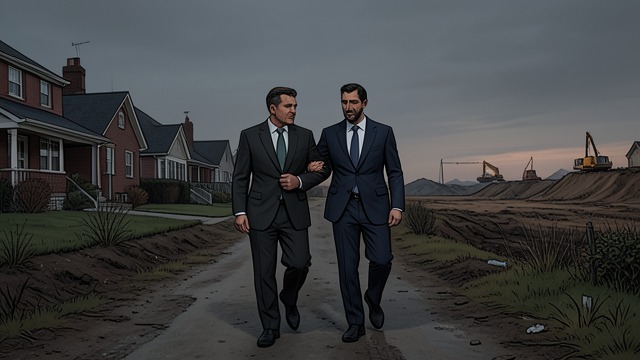
The Final Execution
Polite Violence
Two courteous men lead Joseph K. to a desolate suburb and kill him with bureaucratic calm. The final act is terrifying because it preserves the tone of ordinary procedure.
Shame Without Explanation
His last response registers condemnation without understanding. The execution completes a world in which guilt is felt before it is defined.
The Castle Quest
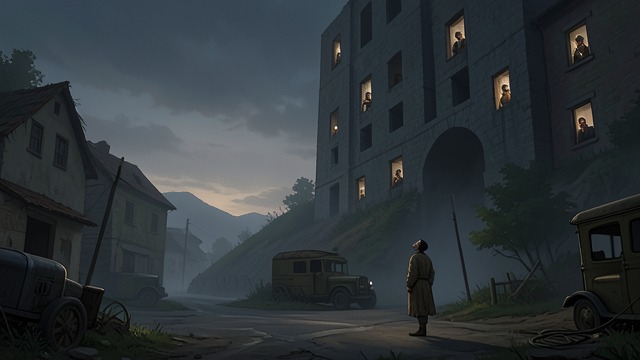
The Castle Quest
Failed Communication
Land Surveyor K. arrives in the village but cannot establish reliable contact with The Castle. Every attempt produces new intermediaries, delays, and partial signals.
Repeated Beginnings
Each frustration restarts the quest rather than ending it. The methodical persistence gives the novel its tragic rhythm.
Hopeful Surrender
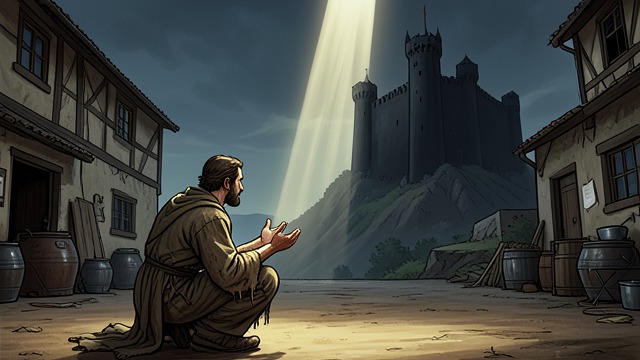
Hopeful Surrender
Desire for Adoption
Land Surveyor K. wants The Castle to accept him as a normal inhabitant of The village in The Castle. He seeks work, home, and belonging rather than an explanation of the system.
Hope Through Absurdity
The quest turns toward grace hidden in injustice and indifference. The resulting hope is moving, but it transforms revolt into submission.
opening of The Trial
middle of The Trial
end of The Trial
opening of The Castle
late The Castle discussion
